
The book
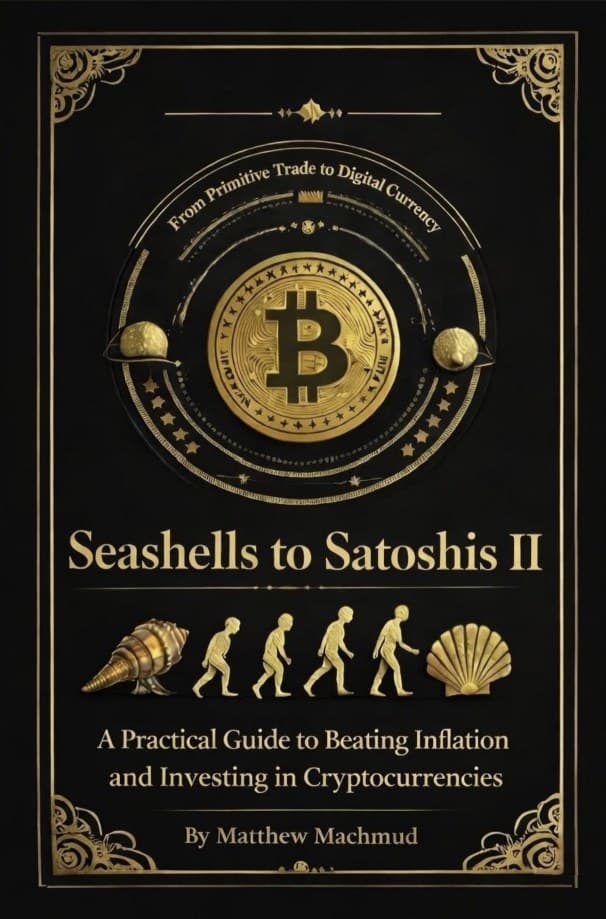
Seashells to Satoshis II
A short history of money, from shells and gold to paper notes and Bitcoin. It explains why some kinds of money held their value and others didn't, so you can think about digital assets with that history in mind.
The first chapter is free with a free account. The full book is included with Membership and Platinum.
What the book covers
Every kind of money has had to answer the same question: what stops someone from making more of it? The book follows that question through five eras.
Early history
Shells, beads and stones
Early communities used shells, beads and stones as money. They worked while they were hard to find, and lost their value once someone could gather or make more of them easily.
Thousands of years
Gold and silver
Precious metals became money across the world because they were scarce, durable and divisible. They were also heavy to move and hard to check, and some rulers clipped or diluted their coins.
From the 1600s
Paper backed by gold
Goldsmiths and banks issued paper receipts for metal held in their vaults. Paper was easier to carry, but it only worked while people trusted the gold was really there.
1971
Money by decree
When the US ended the dollar's link to gold, the major currencies became fiat money, backed by government decree. Central banks can now change how much money there is, and most currencies have lost much of their purchasing power since.
2009
Bitcoin
Bitcoin's software caps its supply at 21 million coins, and anyone can check its public record. It is still young: its price has fallen by more than 70% more than once, and history can't tell us how it will hold up.
What it isn't
The book is history and ideas, not a recommendation. It won't tell you what to buy, sell or hold, and some of its ideas are debated by economists. Read it alongside the course, which covers the risks and the practical side.
See the courseBlack Label · Private, in-person education, by application.
Amanah Freedom Fund (opens in a new tab) · A safe home for at-risk women and children.